Deadwood on broadleaves: what if the rule were wrong?
We are taught that a maple or an oak carries neither jin nor shari. Nature says otherwise.
Le Sens du Bonsaï
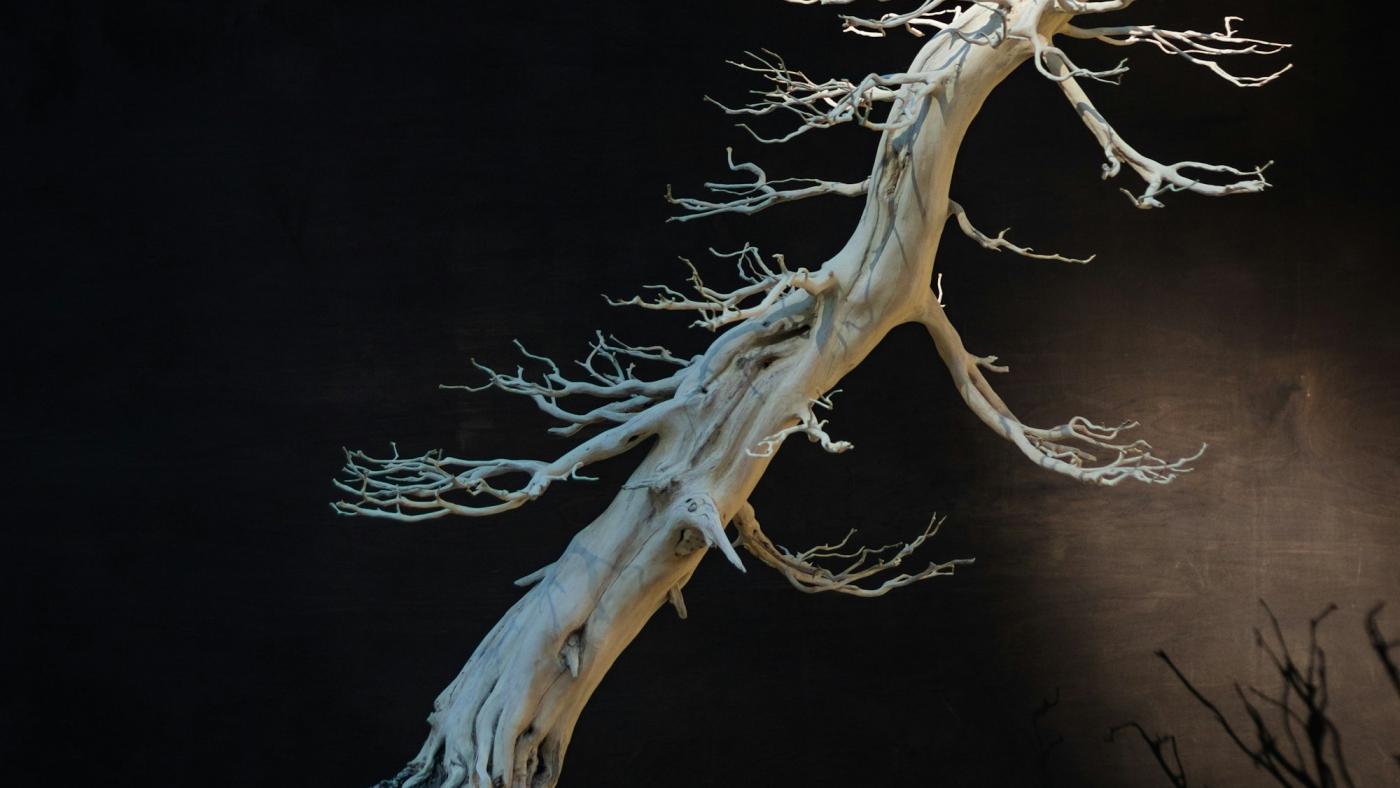
In most bonsai classes, one rule comes back: no deadwood on broadleaves. Jin and shari would be reserved for conifers, junipers and pines first among them. We think the rule deserves to be questioned.
Where the ban comes from
Two arguments support it. The first is cultural: classical Japanese aesthetics prefer, on a broadleaf, smooth bark and a calm outline. The second claims to be horticultural: broadleaf wood would rot too fast to hold as deadwood.
What the tree says
A trunk is made of a core of dead wood, the heartwood, and a crown of living wood, the sapwood, which carries the sap. A hollow tree lives perfectly well: the pollarded oaks of our countryside, hundred-year-old olives and the trognes cut for generations all prove it. When a wound appears, the tree compartmentalises it and isolates the rot instead of letting it spread.
A question of character
Deadwood tells of the tree's struggle. Rather than hiding a scar, you can bring it out, carve it, and create on a Japanese maple a contrast that conifers do not offer. The rule still holds in competitions that follow tradition; in your own garden, you decide.