
Protecting your bonsai from frost
Cold is not the enemy. The dehydration it causes is. What we do, from a light frost to a deep freeze.
Le Sens du Bonsaï
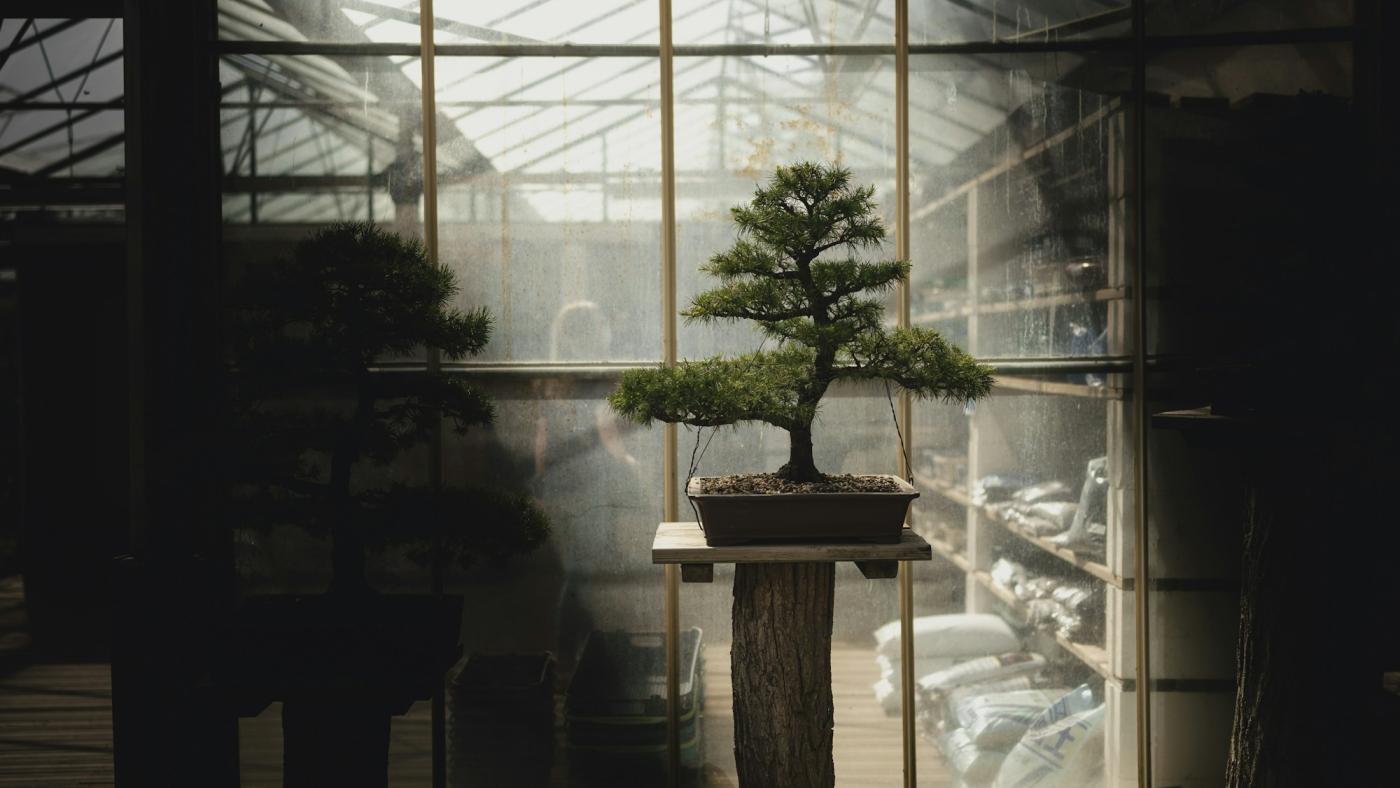
Every winter the same question comes up at the club: should the trees be brought inside? Most often, no. The danger is not the temperature itself but dehydration: a frozen root ball no longer supplies water, while wind and sun keep taking it from the leaves and twigs.
Water before the frost
A generous watering before a cold spell slows evaporation and leaves reserves in the roots. A root ball can freeze for a few days without harm; beyond four or five days, depending on the species, you have to act.
Each species has its tolerance
Pines and junipers take hard frosts with no particular protection. Deciduous broadleaves, Mediterranean species such as olive or fig, and of course tropicals need their root ball protected.
Step by step
- Down to −3 °C: stand the pots on the ground, which gives back a degree or two.
- Around −5 °C: bury the pot partly.
- Below −10 °C: bury it and cover with straw, hessian or horticultural fleece, keeping access for watering.
On a balcony, push the pots against the house wall, which gives off heat, or build a small greenhouse from translucent film. An unheated cold greenhouse remains the ideal shelter: light, access and a steady temperature.